

Your bridal hairstyle is the second most photographed thing about you on your wedding day. The first is your face. The two work together or they don't. National averages from The Knot's 2026 Real Weddings Study put professional bridal hair styling at $150 on its own, or roughly $300 combined with makeup, with the Northeast and Mid-Atlantic running $360 for the combined service. That's the floor for getting a style that actually holds through ceremony, photos, and four hours of dancing.
This guide breaks down the styles that work in 2026, what they cost in your region, when to book, and the mistakes brides regret most. We're not covering bridesmaid styling decisions or bridal hair for elopements (that's a different conversation). We're covering the bride.
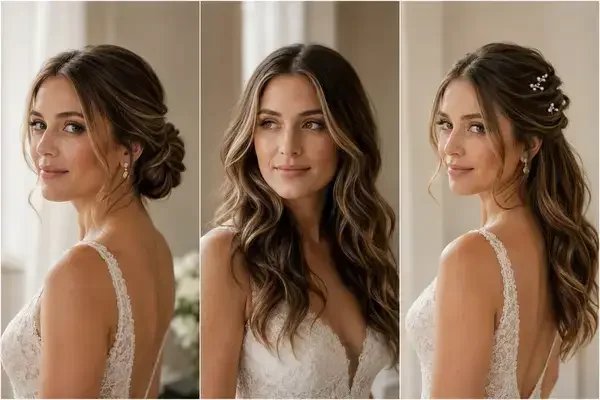
What Is a Bridal Hairstyle?
A bridal hairstyle is a wedding-day hair design built for endurance and photography. It's prepped with longer-hold products, styled to flatter the bride's face shape, dress neckline, and veil placement, and engineered to survive heat, humidity, and movement for 8 to 12 hours. Most brides hire a pro because everyday styling techniques rarely hold that long.
Bridal Hairstyle Trends for 2026: What's In and What's Done
The polished, sprayed-stiff look that dominated 2024 and most of 2025 is on its way out. The big shift for 2026 is what stylists call 'lived-in texture.' Soft. Touchable. Looks like it could move.
The Five 2026 Looks Brides Are Actually Booking
Pulled from stylist reports across 2025 and 2026, these are the looks dominating real wedding-day requests right now. I've watched the chignon dethrone the perfectly sleek bun over the last 18 months and it's not going back. Want to see how these styles photograph? The real bridal portfolio gives you a sense of how lived-in texture reads in actual wedding photography.
• Textured low buns. Soft, slightly undone at the nape. Photographs beautifully from every angle.
• Undone luxe waves. Romantic, with visible bend rather than tight curl. Works under a veil.
• Half-up with movement. The half-up's having a real moment again, but softer than 2022's version.
• Soft chignons with face-framing pieces. The classic, but reworked for a less formal era.
• Hollywood waves with modern bounce. The 2025 polished version is dead. The 2026 version has body and curl variation.
Quick contrarian take: the messy bun isn't a wedding hairstyle. It's a Sunday hairstyle. If your stylist describes their work as 'messy,' ask for a different word and a different reference photo. There's a real difference between 'undone' (engineered to look effortless) and 'messy' (actually falling apart). One photographs like art. The other photographs like you've already left the reception. For brides in the DC metro, Veux Beauty's Hollywood waves service is the most-booked style for receptions in lavish ballroom venues.
Up or Down: Which Wedding Hairstyle Is Right for You?
Updos work best for formal venues, veils, and longer ceremonies. Down styles work best for outdoor weddings, shorter ceremonies, and brides whose dress backs deserve the focus. That's the short version. The long version depends on three things you might not have considered.
Venue sets the first split. Updos suit ballrooms, chateaus, churches, and formal evening weddings. Down and half-up styles read better at gardens, beaches, vineyards, and daytime ceremonies.
Veils make the call easier. An updo accommodates a veil cleanly, sitting above or behind the style without fighting it. With a full down style, the veil is finicky; half-ups can work, but a full down with a veil is the kind of combination most stylists will quietly steer you away from.
Hold time favors updos by a wide margin: 10-12+ hours with proper pinning, versus 6-8 hours before a down style starts to drop noticeably. Humidity widens that gap. Structured updos resist frizz and keep their shape, while loose curl drops faster once humidity passes 70%.
Cost runs $200-$450 for a professional updo and $150-$300 for down or half-up styles. The premium reflects the pinning and structural work an updo requires, not just stylist time.
The factor most brides underestimate is the dance floor. Updos survive it. Down styles usually need touch-ups after the first hour of dancing.
Here's the call most guides won't make: if you're getting married outdoors between June and September anywhere south of Maryland, a full down style is a gamble. Humidity above 65% wrecks loose curl within two hours. Pick an updo or a half-up with secured tendrils. Your photos will thank you.
Does Your Veil Force the Decision?
Yes and no. A cathedral-length veil basically demands an updo or low bun for clean placement. A fingertip veil or birdcage works with most styles. If you're set on hair down with a long veil, you'll need a stylist who knows how to anchor the veil into a hidden braid or pin sequence. Not every artist does this well. Ask to see photos.
Five Factors That Should Drive Your Bridal Hairstyle Choice
Pinterest mood boards are great for inspiration. They're terrible for decisions. These are the five factors that actually matter when you commit.
1. Your Dress Neckline and Back Detail
High neckline or beaded collar? Updo, every time. Putting a down style in front of an ornate neckline visually fights with itself. Open back or low cowl? You have permission to wear it down. The back is part of the dress, so let it show.
2. Weather and Venue Conditions
Summer outdoor wedding: low updo with strong product prep. Winter church: anything goes, but watch for static. According to the Bureau of Labor Statistics, the cosmetology profession is projected to grow 5% from 2024 through 2034, which means more specialists are entering the wedding niche. The good ones plan for weather. Ask your stylist what they'd do if the forecast hits 80°F with 75% humidity on your date.
3. Your Hair's Actual Texture and Density
Fine hair holds curl about half as long as medium hair. Thick, coarse hair needs different prep entirely. Roughly 75% of stylists report wanting more training in textured hair styling, per the PBA's 2024 Community Report. If you have curly or coily hair, ask directly: 'How much experience do you have styling curls similar to mine?' If the answer is vague, keep looking. This is one of the most underasked questions in the entire booking process.
4. Face Shape (But Less Than You Think)
Round face? Volume at the crown elongates. Heart-shaped? Soft tendrils at the jaw balance a wider forehead. Long face? Avoid extreme height. That said, face shape rules get oversold. A talented stylist adapts any style to flatter your features. Don't reject a look you love because a chart told you to.
5. The Wedding's Actual Vibe
A black-tie ballroom calls for something more structured than a backyard ceremony in linen. Match your hair to the formality, not the other way around. If you're doing a small civil ceremony then a big reception, plan for a style transition or accept the formality of the main event.
How Much Does a Bridal Hairstyle Cost in 2026?
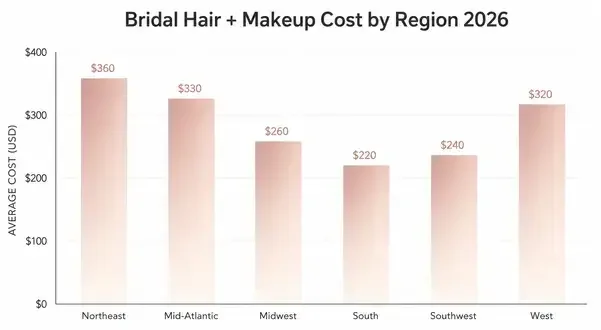
Professional bridal hair styling averages $150 nationally on the wedding day, and $300 combined with makeup. Costs vary by region by as much as 38%. The Knot's 2026 Real Weddings Study, which surveyed 10,474 couples married in 2025, pegs the median combined hair-and-makeup spend at $280, with the upper quartile hitting $390.
Regional Pricing for Bride Hair + Makeup (2026)
Bride hair plus makeup averages $260 to $360 depending on where you're getting married. The Northeast and Mid-Atlantic (DC, MD, VA) tie at the top of the range at $360. The West Coast comes next at $320. Costs drop heading south and inland: $290 in the South and Southeast, $280 in the Southwest, and $260 in the Midwest, which is the most affordable region in the country.
That's a $100 spread, or roughly 38% more expensive on the coasts than in the middle of the country. Build the regional number into your budget early because it pulls the rest of the beauty line items with it: trial fees, on-site travel charges, and bridal party services all scale proportionally to local rates.
Source: The Knot Real Weddings Study, published May 2026.
What Adds to the Bill
• Trial appointments: $225-$350 (often credited toward wedding-day total).
• Intricate braids or extensions: $30-$50 added.
• Travel fees: vary by distance and metro area; confirm in writing before booking.
• Wedding party: roughly $110 per person for hair, $100 for makeup.
• Gratuity: 15-25%, almost always overlooked in budgeting.
Skipping the trial is the single most expensive mistake. Brides who skip it and end up with a style they hate often pay a premium for a last-minute fix, if a stylist is even available that morning. The Knot's data on wedding hair and makeup costs backs this up across thousands of post-wedding surveys. If you're working with a bridal hair and makeup team in a high cost-of-living market, expect to pay closer to $400+ for bride-only services with experienced artists.
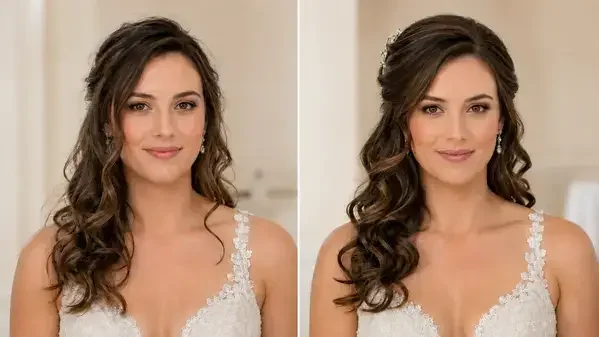
Is a Professional Bridal Hairstyle Worth Paying For?
72% of couples hire professional beauty vendors for the wedding day. The 28% who don't usually fall into one camp: brides with cosmetology backgrounds, or brides who underestimated the difference and regret it later.
Cost is the obvious factor. DIY runs $0-$50 with products you already own, while professional styling for the hair alone runs $150-$450+. But time and hold tell the more important story. DIY requires 4-10+ hours of practice over the weeks leading up to the day. A pro handles the same outcome in 1-2 hours on the morning, with no rehearsal demands on you. DIY styles hold 4-6 hours; professional work with proper prep holds 8-12+ hours, which is the difference between hair that still looks like the photos at the ceremony and hair that still looks like the photos at the reception.
The two factors brides underweight are stress level and photo quality. Doing your own hair on your wedding morning is high-stress by definition. Hiring a pro deletes the hardest part of the morning from your own list. Professional hair is also built for the camera. DIY structure is variable and rarely matches what a pro produces under flash and zoom lenses.
Here's the part the DIY influencers don't tell you. A YouTube tutorial works in a quiet bathroom with no time pressure. Your wedding morning has people asking questions, photos being taken, your phone buzzing, and a hard deadline. The 72% of couples who hire a pro aren't doing it because they can't curl their own hair. They're doing it because they don't want to spend their morning fighting with it.
When Should You Book Your Bridal Hairstylist?
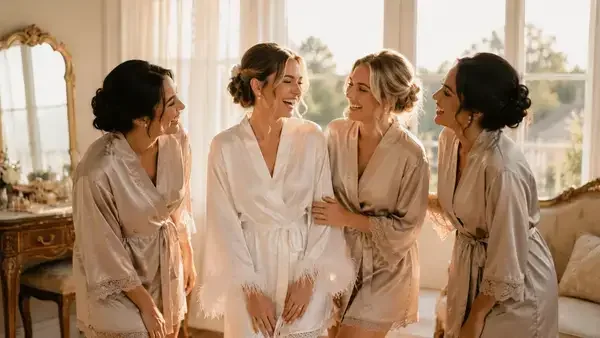
Six to twelve months out for peak wedding seasons (May through October). Top stylists in major metros book up 9-12 months ahead for Saturdays. Off-season weddings can sometimes book 3-4 months out, but don't bet on it.
The Booking Timeline That Actually Works
• 12 months out: Research stylists. Save Instagram portfolios. Read reviews on multiple platforms.
• 10-12 months out: Initial consultations and contract signing. Deposit secures your date.
• 2-3 months out: Schedule your trial. Bring your veil, accessories, and a photo of your dress neckline.
• 1 month out: Final timeline confirmation. Confirm getting-ready location, start time, and party size.
• 1 week out: Touch-base text or call. Confirm address, parking, gratuity plan.
Actually, that last bullet isn't quite right. The better practice is to confirm payment method and gratuity expectations during contract signing, not the week of. You don't want to be doing the gratuity math while putting on your dress. For brides in the DMV who want to connect with a local wedding hair and makeup team, the booking window is even tighter. May, June, September, and October weekends in DC book solid by January.
Do You Really Need a Bridal Hair Trial?
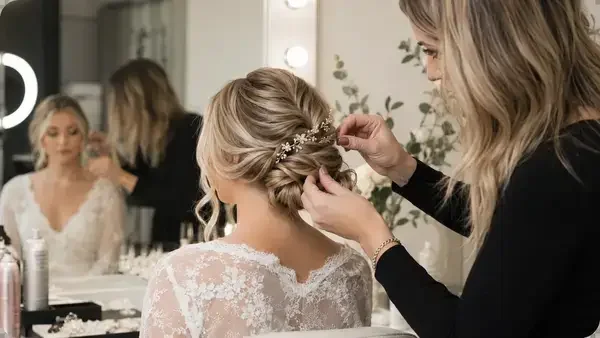
Yes. Always. The trial isn't optional in the same way the wedding-day service isn't optional. Anyone telling you to skip it to save money is giving you the worst advice in this entire process.
What a Good Trial Includes
• 60-90 minutes of styling time.
• Testing your veil placement and any accessories you plan to wear.
• Photo session under different lighting (window light, flash, outdoor if possible).
• A formal walkthrough of the wedding-day timeline.
• Documented notes the stylist keeps for the wedding day.
Trial costs run $225-$350. Many studios credit a portion back if you book the wedding-day service. The number-one source of wedding-day hair regret in post-wedding surveys is brides who didn't trial their stylist. The second is brides who trialed but didn't bring their veil.
How to Choose Bridal Hair Accessories That Don't Overwhelm
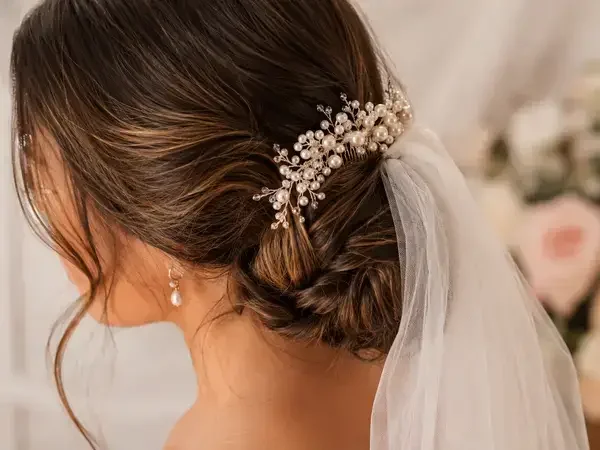
The accessory should support the hairstyle. Not compete with it. Size, shape, color, and venue context all factor in, but the simplest rule is this: if you notice the accessory before the bride, the accessory is too big.
Matching Accessories to Wedding Style
Accessories follow the venue and the vibe more than the dress. For traditional or formal weddings, the safest pairings are a cathedral or chapel veil, a classic tiara, or a pearl-detailed comb. Outdoor weddings - beaches, gardens, vineyards - take floral crowns, organic vine pieces, and hair pins with leafy detail well. Vintage and Art Deco themes call for beaded headbands, feather fascinators, or drop pearl pins. Modern and minimalist brides usually land on a single metal hair cuff, a sleek pin, or a clean pearl trio.
Cultural and heritage pieces are a separate conversation. Bring whatever reflects your family's tradition and coordinate placement with your stylist before the day. Some pieces need specific anchoring or hair prep to sit correctly, and that's not a same-day decision.
The Order-of-Choice Question
Most wedding guides say: pick the dress first, then the accessories. That's outdated. Plenty of brides find an heirloom comb or a vintage hairpin first and build the look around it. Both approaches work. What doesn't work is picking everything separately and hoping it coordinates on the day. Make your stylist part of the conversation early, even before final dress fittings if possible.
What to Watch Out For When Hiring a Bridal Stylist
Last-minute cancellations and no-shows are rare but happen. I've seen brides post on planning forums about artists ghosting 12 hours before the ceremony. Almost every horror story shares two features: no signed contract and no deposit-protected booking.
Red Flags That Should End the Conversation
• No contract or terms in writing.
• Cash-only with no receipt or invoice.
• Refuses to do a trial or hides the trial fee structure.
• Portfolio is all editorial shoots, zero real weddings.
• Vague on textured-hair experience when you have textured hair.
• No backup plan if they're sick or in an emergency.
• Pressures you to book within 24 hours of inquiry.
I tell every bride to ask one specific question that almost nobody asks: 'What's your backup plan if you're sick on the wedding day?' A professional bridal stylist has one. A weekend warrior usually doesn't. This single question filters out maybe 30% of the inquiries you'd otherwise be considering. Working with an experienced bridal team that has multiple senior stylists is the safest answer to that question.
What You Get at Each Bridal Hairstyle Pricing Tier
Budget tier runs $100-$200 and gets you newer stylists building their portfolios. Styles tend to be basic, and limited textured-hair experience is common at this level, which matters if you have curly, coily, or wave patterns that need a stylist with specific training.
Mid-range is $200-$350 and is where most brides land. These are established stylists with solid track records who handle the full range of updos and half-ups confidently. The trial is often included in the package or credited toward the day-of total.
High-end starts at $400 and goes up from there. You're paying for celebrity-level artists, extensions and airbrush makeup add-ons, and stylists whose portfolios run in major bridal publications. Travel is usually included or discounted at this tier rather than charged on top.
Most brides land in the mid-range and stay happy. Going budget makes sense if you have simple hair, a simple style, and a verified portfolio. Going high-end makes sense for destination weddings, very public events, or styles that need extensions and serious technical skill.
One Decision That Matters More Than the Rest
If you take one thing from this guide, take this: book your bridal hairstylist early, do the trial, and document everything in writing. The style itself matters less than most brides think. The execution matters more. A simple chignon done well looks better in photos than an intricate updo done poorly. And the right bridal hairstyle, paired with the right stylist, makes the morning of your wedding feel calm instead of frantic. That's worth every dollar. The team behind Veux Beauty's bridal services in the DMV has spent the last decade proving that point one wedding at a time.
FAQs
What if your bridal hairstylist cancels last minute?
Rare, but it happens. The protection is your contract. A signed agreement should name a backup stylist or partner studio, define deposit refund terms, and lock in the wedding-day timeline. Always pay your deposit through a method that leaves a paper trail. Ask before signing what happens if the lead artist is sick on the day, and if the answer is vague, keep looking. Established teams with multiple senior stylists offer the strongest backup coverage.
Is a bridal hair trial worth the cost?
Yes. Skipping the trial is the most common wedding-day hair regret reported in post-wedding surveys. A proper trial runs 60-90 minutes, includes veil placement, and gives the stylist documented notes for the wedding day. Trial fees are often credited toward the wedding-day total. Brides who skip the trial and end up needing a last-minute fix usually pay a premium, if a stylist is available at all on a Saturday morning during wedding season.
How far in advance should you book a bridal hairstylist?
Book 9 to 12 months in advance for weddings during peak season (May through October), especially Saturdays in major metros. Off-season weddings sometimes secure stylists 3-4 months out, but top artists in cities like Washington DC and New York fill their wedding-season calendars by January each year. The earlier you book, the better the stylist availability and the lower the deposit required.
What is the best bridal hairstyle for 2026?
The top 2026 bridal hairstyle trends are textured low buns, undone luxe waves, half-up styles with movement, soft chignons with face-framing pieces, and Hollywood waves with modern bounce. The polished, sprayed-stiff look that dominated 2024 and 2025 is fading. Lived-in texture is the defining 2026 bridal hairstyle aesthetic, prioritizing soft, touchable styles that photograph as effortless.
Should I wear my hair up or down for my wedding?
Updos work best for formal venues, cathedral-length veils, and outdoor summer weddings with high humidity. Down styles and half-ups work best for daytime ceremonies, low-back or off-the-shoulder dresses, and shorter events. If your wedding falls between June and September in humid climates, an updo or secured half-up will hold up significantly better than full down styles.
How do you choose a bridal hairstyle for your face shape?
Round faces benefit from volume and height at the crown to elongate. Heart-shaped faces are balanced by soft tendrils near the jaw. Long faces should avoid extreme height. That said, a skilled stylist adapts any style to flatter your features. Face shape rules get oversold. Bring photos of your dress neckline to your trial and let your stylist tell you what works against your actual head shape and hair texture.
What questions should you ask before hiring a bridal hairstylist?
Ask about textured-hair experience if relevant, backup plans if the stylist is sick, exact travel fees, trial fee structure and credits, and contract terms in writing. Almost 75% of stylists report wanting more training in textured hair, per the PBA's 2024 Community Report, so this question matters. A red flag is any artist who pressures you to book within 24 hours or refuses to provide written terms.