

How To Choose A Wedding Style You Won't Regret Later
Your wedding style isn't a Pinterest board. It's the visual and emotional thread that connects every decision you'll make, from the venue to the veil to the shade of lipstick you wear walking down the aisle.
A wedding style is the consistent aesthetic and mood that runs through every element of your event, including the venue, decor, attire, music, and bridal beauty choices. It's different from a wedding theme, which is a specific concept or motif layered on top of that foundation. Getting this right early makes every other planning decision faster, cheaper, and less stressful.
Most couples skip this step entirely. They start saving images on Instagram, fall in love with a venue on a Saturday tour, and then spend the next year trying to force a hundred disconnected decisions into something coherent. That's backwards. And it's why so many weddings end up looking like slightly different versions of the same template.
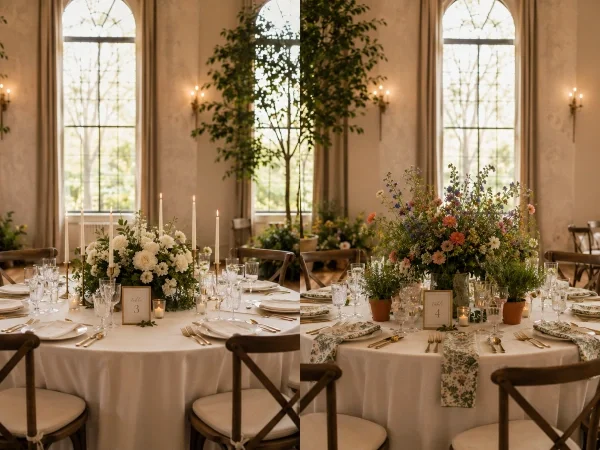
Wedding Style vs. Wedding Theme (They're Not the Same Thing)
This is the distinction most wedding blogs ignore, and it causes real problems down the line.
A style is your overall visual identity. Think of it as the DNA of your event. Classic, bohemian, modern, rustic, romantic. It dictates the general direction of everything.
A theme is a specific concept built within that style. A rustic style might use a "vineyard harvest" theme. A classic style might use an "old Hollywood" theme. The style holds everything together. The theme adds personality on top.
Zola's First Look Report (March 2026, surveying 11,500+ couples) found that 48% of couples describe their wedding style as "classic." That means roughly half of all weddings share the same general aesthetic starting point. The details within that style are what make each one feel different.
If you lock in a theme before you've settled your style, you'll end up with a disjointed event where the centerpieces fight the dress and the music feels off. Style first. Always.
How Do You Figure Out Your Wedding Style?
Start with your actual life. Not your Pinterest board.
Look at your home. What's on the walls? What do you wear on a Saturday when nobody's watching? If your apartment is all clean lines and neutral tones, a barn wedding with burlap runners is going to feel like a costume. If your closet is full of vintage finds and bold prints, a minimalist ballroom will feel sterile.
Pull images from your everyday life. Restaurant interiors, travel photos, album covers, movie screenshots. These tell you more about your shared visual taste than a curated wedding mood board ever will.
Then narrow it down to three words. "Warm, organic, intimate." Or "sleek, modern, dramatic." Every vendor you hire, from your florist to your bridal hair and makeup artists, should be able to look at those three words and immediately understand the direction.
One more thing. Don't build your mood board alone. Sit down with your partner and do it together. I've watched couples plan for months in separate directions, only to realize at the first vendor meeting that they had completely different visions. That conversation needs to happen early.
Does Your Venue Dictate Your Wedding Style?
More than most couples expect. A converted warehouse in DC's Ivy City neighborhood is going to resist a traditional, formal style. A historic estate in Virginia wine country is going to fight against an industrial, minimal look.
The right order is: decide your style, then choose a venue that supports it. When couples do it backwards (fall in love with a venue, then try to retrofit a style), they spend the next 12 months swimming upstream. It works out sometimes. But it's harder than it needs to be.
Season matters too, but not the way most guides frame it. The real question isn't "what style fits summer?" It's "what practical constraints does my season create?" A July outdoor ceremony in Washington, DC means humidity affects your hair, your makeup, and your flowers. That's not a style choice. That's reality. Your hair and makeup team and your florist need to plan around it, not pretend it doesn't exist.
Winter opens up different possibilities. Heavier fabrics, candlelit receptions, richer color palettes. But it also means shorter daylight windows for photography, which affects your timeline.
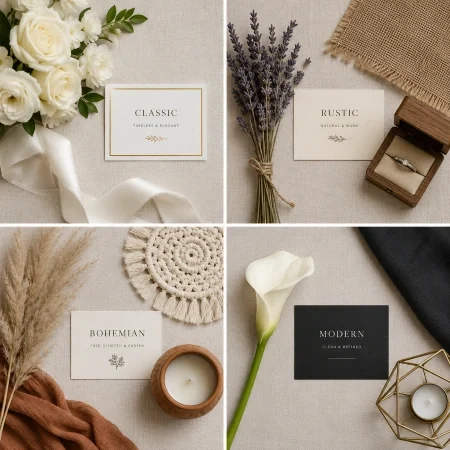
The Most Popular Wedding Styles in 2026
Here's a practical breakdown of where each style works best and where it falls apart.
Classic/Traditional. Clean lines, symmetrical arrangements, white and green palettes, formal attire. Works best in ballrooms, estates, and historic venues. Still the most common starting point by a wide margin.
Romantic. Soft colors, candlelight, lush florals, flowing fabrics. The difference between romantic and classic comes down to texture and warmth. Romantic leans into organic imperfection.
Rustic/Country. Natural materials, wood, greenery, earth tones. Heavily venue-dependent. Looks stunning in barns and outdoor settings. Looks forced in a hotel ballroom.
Bohemian. Eclectic, layered, textured. Think macrame, wildflowers, mixed patterns. This is the style most often done poorly, because people confuse "boho" with "unplanned." Good bohemian styling is extremely intentional.
Modern/Minimalist. Geometric shapes, clean surfaces, intentional negative space. Every single element has to be chosen with care. One random, off-brand detail and the whole thing unravels.
Vintage. Pulls from a specific era (1920s art deco, 1970s retro, etc.). Requires real commitment. Half-vintage just looks confusing.
The big shift in 2026 is toward softer, grounded palettes. Zola's data shows sage green appearing in 53% of weddings, up significantly from previous years. The broader trend points toward hyper-personalized details over cookie-cutter aesthetics. Couples are telling their own stories instead of replicating someone else's feed.
Working with Professionals to Refine Your Vision
Here's a take most wedding blogs won't give you. You don't need a wedding planner to figure out your style. But you absolutely need professionals to execute it consistently across dozens of vendor decisions.
The gap between "I know what I want" and "every detail across 47 vendor relationships reflects that vision" is enormous. A planner, stylist, or day-of coordinator bridges that gap.
When you're hiring bridal beauty professionals, style alignment matters just as much as technical skill. An artist who specializes in natural, editorial looks will give you a completely different result than one known for heavy, full-coverage glam. Even if the technique is equally strong. Browse their previous work before booking. If their portfolio doesn't reflect your wedding style, the match probably isn't right.
The best bridal teams will ask about your overall wedding style before they ask about your skin type. That's the sign of someone who understands that bridal beauty is part of a larger picture, not a standalone service.
How Do You Stay Authentic Without Chasing Trends?
Trends are data points. Not instructions.
The 2026 move toward "rooted romance" (plum, olive, and fig tones, according to Vogue's April 2026 reporting) is gorgeous if it already aligns with your taste. If it doesn't, skip it. Your wedding photos need to age well. A trend-driven wedding from 2018 already looks dated. A classic one from 2004 still holds up.
One simple test: if you wouldn't put it in your own living room, don't put it at your wedding. Trends that don't match your everyday life will feel like a costume in photos five years from now.
And don't skip the trial run. Visit your venue at the same time of day as your ceremony. See how the light hits. Bring fabric swatches. This is the step most couples cut for convenience, and it's the one that catches style mismatches before they become problems you can't fix on the day.
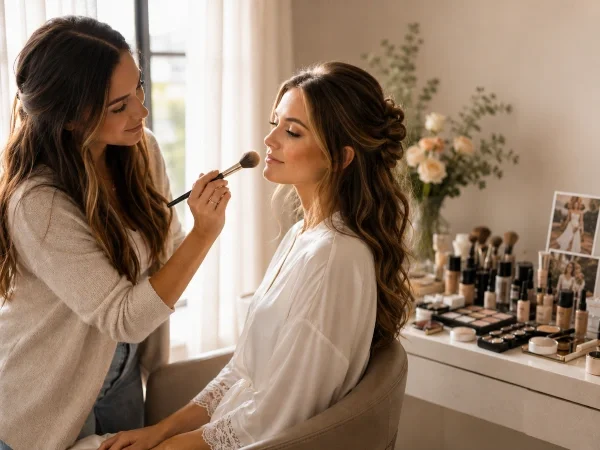
Bridal Hair and Makeup Bring Your Wedding Style Together
This is the piece most couples leave until last. It should be one of the first things you lock in.
Your bridal beauty look is the most visible element of your wedding style. It's in every photo, from every angle, for the entire day. If your hair and makeup don't match your overall aesthetic, the disconnect shows up everywhere. That's why working with a bridal beauty team that specializes in your style matters more than most couples realize.
A bohemian wedding with heavily contoured, full-glam makeup creates a visual clash. A formal black-tie affair with loose beachy waves sends mixed signals. The beauty direction has to be an extension of your style.
The 2026 bridal beauty trend is moving toward "skin-first" approaches. Natural glow, soft brows, polished updos that look effortless but require serious skill. This shift prioritizes how you actually look over how much product is on your face, and it photographs significantly better in natural light.
Book your hair and makeup trial one to three months before the wedding. Not the week of. A trial isn't a luxury. It's how you confirm that your bridal look aligns with your wedding style before the day when changing course isn't an option. Pros recommend building time for skin prep months ahead as well, because consistent hydration and care do more for your bridal look than any single product on the day.
The couples who still love their wedding photos a decade later didn't chase whatever was trending the week they started planning. They chose a wedding style that matched who they actually are, and then they hired professionals, from an experienced team that understands their vision to a bridal artist who gets the aesthetic, to make every detail reflect it.
FAQs
How early should you decide on a wedding style?
Nail down your wedding style before you book a single vendor. For most couples, that means 10 to 14 months before the wedding date. Your style drives your venue choice, your vendor shortlist, your color palette, and your bridal beauty direction. Locking it in early prevents the cascading mismatches that happen when couples make decisions in isolation over several months.
What's the difference between a wedding style and a wedding theme?
A wedding style is your overall visual identity and mood. Classic, bohemian, modern, rustic. It's the foundation. A wedding theme is a specific concept layered on top, like "garden party" within a romantic style or "art deco" within a vintage style. Zola's 2026 data shows 48% of couples choose "classic" as their base style, then personalize with a theme.
Can you mix two wedding styles together?
Yes, but it works best when one style leads and the other adds accents. A primarily classic wedding with bohemian floral touches reads as intentional. A 50/50 split between rustic and modern reads as indecisive. Pick a dominant style for roughly 80% of your decisions and let the secondary style show up in specific details.
How do you match bridal hair and makeup to your wedding style?
Start by sharing your three-word style description and mood board with your bridal beauty team before your trial. A natural, dewy look fits romantic and bohemian styles. Polished, structured hair suits classic and modern aesthetics. According to 2026 beauty trend data, the "skin-first" approach (prioritizing natural glow over heavy coverage) is now the dominant direction for bridal makeup across nearly all styles.
What wedding style works best for outdoor ceremonies?
Bohemian, rustic, and romantic styles translate most naturally to outdoor settings. Modern and minimalist can work outdoors but require more intentional styling to avoid looking sparse. The bigger factor is weather. A July ceremony in the DC area means humidity will affect hair hold, makeup longevity, and floral freshness. Plan your beauty and vendor choices around the conditions, not just the aesthetic.
Do wedding styles affect your photography?
Absolutely. Your wedding style influences lighting choices, composition, color grading, and even which moments the photographer emphasizes. Moody, candlelit romantic weddings produce very different images than bright, airy minimalist ones. Share your style vision with your photographer early so they can plan their approach, gear, and editing style around it.
What's the most popular wedding style in 2026?
Classic remains the most chosen style, with 48% of couples selecting it according to Zola's 2026 survey of 11,500+ couples. The biggest shift is within color palettes. Sage green now appears in 53% of weddings, and there's a strong move toward softer, grounded tones (plum, olive, fig) over the bright whites and metallics that dominated a few years ago.