

Wedding Makeup Look Guide: How To Pick The Right One
Roughly 72% of couples who got married in 2025 hired a professional for hair and makeup, according to The Knot's Real Weddings Study. That means the other 28% figured it out solo. Whether you're hiring someone or doing it yourself, the wedding makeup look you land on will show up in every photo from the day. So it's worth getting right.
A wedding makeup look is the specific combination of base, eye, lip, and cheek products you wear on your wedding day, chosen to match your venue, outfit, lighting, and personal style. The best approach isn't scrolling Pinterest for hours. It's working backward from decisions you've already made.
This article won't cover product recommendations or application tutorials. That's a different conversation. What we're doing here is helping you narrow down your direction before you ever sit in a makeup chair (or stand in front of your own mirror).
Finding a Wedding Makeup Look That Matches Your Day
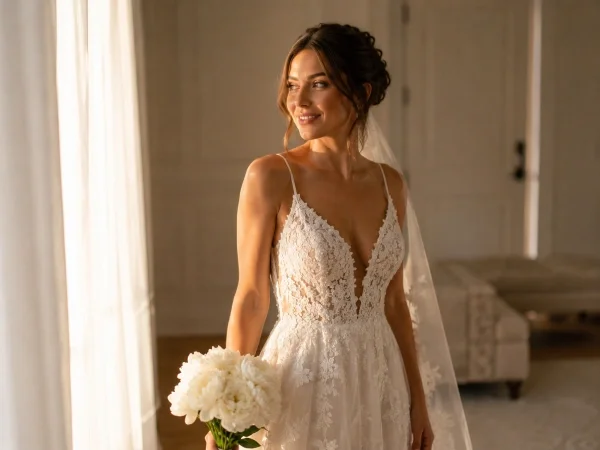
Most people overthink this. You don't need to build a look from scratch. You already have most of the information you need, buried in the wedding planning decisions you've already locked in. Your venue, your dress, your guest count, your vibe. All of that points toward a makeup direction. You just have to connect the dots.
Describe Your Wedding in Three Words
This is the fastest shortcut I've seen work. Pick three words that describe the feeling of your wedding. Not the logistics. The feeling.
"Intimate, garden, romantic" points you toward soft, dewy skin with warm tones. "Modern, rooftop, sleek" pushes you toward clean lines, a bold lip, and maybe a matte finish. "Rustic, barn, casual" probably means you don't want a full-glam contour situation.
I've watched brides spend weeks agonizing over inspiration photos when five minutes with this exercise would've cut the options in half. Write the three words down. Tape them to your mirror. Every makeup option you consider from that point should pass the three-word test.
What Can Celebrity Red Carpet Looks Teach You?
Celebrity photos are useful, but not for the reason most people think. You're not trying to copy someone's exact look. You're trying to figure out what you're drawn to when you see it on someone else.
Pull five or six red carpet shots you love. Then ask yourself what they have in common. Is it always a nude lip? A dramatic eye? Glowing skin? That pattern tells you something about your instincts that's more reliable than any trend report.
The trap is picking a look because it's popular right now. One bridal makeup artist put it well in a late 2025 interview. She noted that more brides are choosing looks that feel personal and authentic over whatever's trending on social media. I agree with that. Trends fade from photos. Your personality doesn't.
Match Your Makeup to Your Outfit
Your dress (or jumpsuit, or suit, or whatever you're wearing) is the anchor. Everything else, including makeup, should support it, not compete with it.
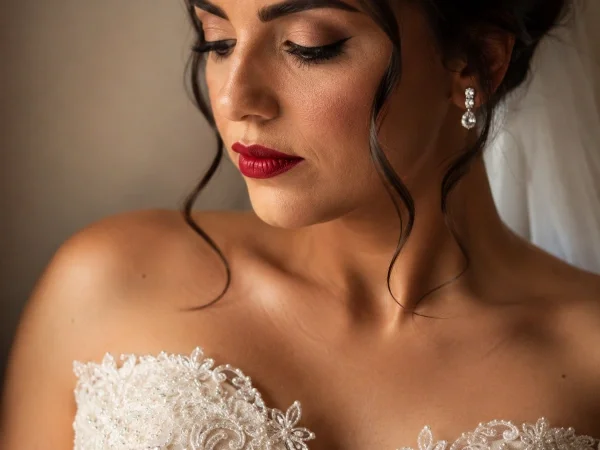
A structured ball gown with heavy beading can handle a stronger makeup look. A cat eye, a red lip, a defined brow. That kind of thing. But a flowy, minimal dress fights against heavy makeup. It looks mismatched, and past bridal looks from real weddings prove the point. The brides who match their makeup intensity to their outfit intensity always photograph better.
If you're not sure where your outfit falls, look at the fabric. Heavier, more structured fabrics support bolder makeup. Lighter, more fluid fabrics look best with softer application.
Why Does the Weather Forecast Matter?
This is the section most wedding makeup articles treat as a throwaway paragraph. It shouldn't be. Weather determines product performance.
If your wedding is outdoors in July, and you're using a dewy foundation without waterproof setting spray, you're going to have a problem by hour three. One professional makeup educator has said that brides should prioritize skin prep and sheer, breathable layers over heavy coverage. That's especially true in heat and humidity. Cream-to-powder hybrids and matte finishes hold up far better than full-coverage liquid foundations when temperatures climb.
Cold weather creates the opposite issue. Dry air pulls moisture from your skin, and makeup that looks great during your morning routine can look flaky and patchy by the ceremony. Hydrating primers and luminous finishes work better in winter. Check the forecast at least a week out and discuss it with a professional artist who can adjust the product lineup.
Should You Ask Friends and Family for Opinions?
Honestly, this depends on the friends.
If you have people in your life who know your taste, who've seen you at your most confident, and who'll give you a straight answer, then yes. Pull your top three looks and let them react. Create a quick "yes" and "no" pile. You'll know quickly which direction feels right based on their reactions.
But if your circle tends to project their own preferences onto you, this becomes noise rather than signal. I've seen plenty of brides talk themselves out of a look they loved because one person said it was "too much." Trust your gut. Other opinions are input, not authority.
The Case for Going Classic
When all else fails, classic works. There's a reason old Hollywood glam has survived every trend cycle since the 1940s.
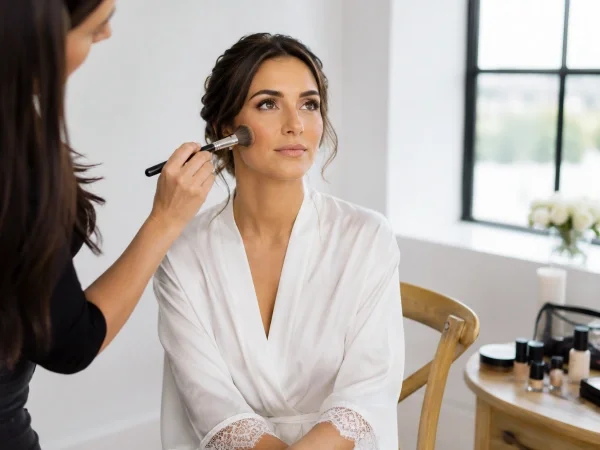
The formula is simple. Pick one feature and make it the star. A bold red lip with soft, neutral eyes. Or a dramatic smokey eye with a nude lip. Never both at the same time. That restraint is what makes the look timeless, and it's why it photographs well across every lighting condition and venue type.
2026 trends are actually reinforcing this. Multiple expert sources have described the dominant direction as "authentic refinement," meaning soft glam, real skin texture, and less visible product overall. That shift tracks with broader beauty industry research showing consumers moving toward products that look and feel like real skin. If you're considering bridal hair and makeup with a professional team, ask to see examples of this softer approach. It's the sweet spot between "I'm barely wearing anything" and full Instagram glam.
How Do You Filter Through Endless Inspiration?
Pinterest boards with 200+ pins are a sign you've stopped making decisions and started collecting. That's not the same thing.
The single best filter? Only save photos of makeup on people who look like you. Similar skin tone, similar features, similar face shape. I know that sounds obvious. But most people save looks on models and influencers without considering that the same products will land differently on different faces. A makeup look that works on someone with deep olive skin and high cheekbones will not translate the same to fair skin with a round face.
If you've been browsing featured wedding work for inspiration, pay attention to brides who share your complexion and features. That's a much more useful starting point than any celebrity photo.
Your Preferences Come First
Everything above is a framework. It's not a rulebook.
If you want a neon eyeshadow with a dark lip and glitter on your cheekbones, that's your call. The FDA's Modernization of Cosmetics Regulation Act has pushed the entire industry toward safer, better-tested formulas, which means even bold, unconventional products are more reliable than they were a few years ago. You've got more options now than brides have ever had.
The one thing I'd push back on? Don't skip a trial run. That's the single biggest regret I hear from brides, and professional makeup artists say the same thing across the board. A trial lets you see how the look holds up over several hours, how it photographs, and whether it actually makes you feel like yourself. That last part is the whole point of choosing the right wedding makeup look in the first place.
Working with a creative team that understands your vision can make the entire planning process feel less scattered. But whether you go pro or DIY, the right wedding makeup look is the one that makes you stop second-guessing when you see yourself in the mirror.
FAQs
Does wedding makeup look different in photos than it does in person?
Yes. Flash photography can wash out lighter makeup, while heavy coverage often looks flat and mask-like in natural light. Professional makeup artists in 2025 and 2026 have been favoring sheer, luminous bases that photograph with real skin texture. If you want your photos to look like you (and not a filtered version of you), a soft-blur finish tends to perform better than full-coverage foundation across both indoor and outdoor lighting.
What wedding makeup lasts through crying and humidity?
Matte formulas, waterproof setting sprays, and thorough skin prep are the biggest factors. Airbrush application typically lasts 8 to 12 hours, which is longer than most traditional methods. But even the best products can fail without a primer and setting routine. A makeup trial is the only reliable way to test how your look holds up under the specific conditions of your venue and climate.
Is full glam wedding makeup outdated in 2026?
Not outdated, but the trend has shifted. Multiple bridal makeup professionals have described the 2026 direction as "authentic refinement," meaning visible skin texture, softer contour, and less overall product. About 72% of 2025 couples hired professional beauty services according to The Knot's Real Weddings Study, and many of those artists are now steering clients toward looks that prioritize natural radiance over heavy coverage.
Should I do a makeup trial before my wedding?
Absolutely. Skipping the trial is the most common regret makeup artists hear from brides. A trial lets you test how products hold up over several hours, how the look photographs in different lighting, and whether the overall result feels like you. Most professional artists offer trial sessions, and the feedback loop is worth every minute.
How do I match my wedding makeup to my skin tone without looking off in photos?
Undertone matching is the key. Your foundation should match the undertone of your jawline and neck (warm, cool, or neutral), not just the surface color of your face. Sheer formulas are more forgiving than full-coverage ones because they let your natural skin show through. A professional will test the shade in your actual wedding lighting, which prevents the orange or gray cast that shows up when foundation is matched under store fluorescents.
What type of wedding makeup works best for outdoor summer weddings?
Cream-to-powder hybrids, matte finishes, and SPF-infused primers perform best in heat. Avoid heavy dewy products outdoors in warm months because they break down faster and can look greasy in photos. Waterproof formulas for eyes and lips, combined with a strong setting spray, will give you the longest wear time when temperatures rise.
Are clean beauty products reliable enough for all-day wedding wear?
They're getting there. New FDA regulations under MoCRA (the Modernization of Cosmetics Regulation Act) have pushed manufacturers toward better safety testing and ingredient transparency. Skincare-infused formulas that combine clean ingredients with long-wear performance have improved significantly in 2025 and 2026. The catch is that clean products still vary widely, so a trial run is the only way to confirm they'll last through your specific event.