

Wedding Makeup In 2026: Trends, Tips, And What Actually Lasts
The biggest shift in wedding makeup right now isn't a product or a technique. It's a mindset change. Brides in 2026 are choosing looks built around their actual skin and features, not Instagram filters. That means less heavy coverage, more skin prep, and a focus on makeup that survives 12+ hours of ceremonies, photos, hugs, and dancing. If you're planning your wedding day look, the trends worth paying attention to all point in one direction: makeup that looks like you, just polished.
Wedding makeup is the combination of techniques, products, and professional application designed specifically for a bride's wedding day. It differs from everyday makeup in its focus on longevity, photo performance under mixed lighting, and the ability to hold up through an emotionally and physically demanding event.
This article covers the specific trends shaping bridal beauty right now, how to prep your skin months out, what's actually changed from even two years ago, and the questions most brides forget to ask before their trial. We won't get into hair trends or nail art here. Those deserve their own space.
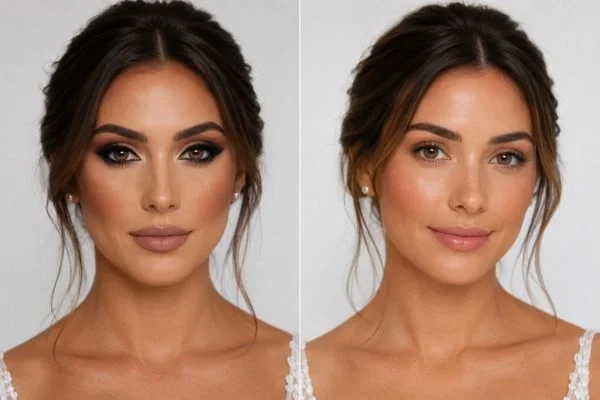
How Is Wedding Makeup Different in 2026?
The short answer: it's less about transformation and more about amplification. The heavy contour, baking, and ultra-matte finishes that dominated a few years ago look dated in current wedding photography. Brides and professional bridal beauty teams are moving toward skin that actually looks like skin, with soft definition and a glow that reads well on camera and in person.
I've worked on enough bridal content to see this pattern clearly. The brides who are happiest with their photos five years later almost always went with a "your face, but better" approach rather than a full-mask transformation. That doesn't mean it's boring. It means intentional.
A professional makeup artist and beauty educator noted in early 2025 that bridal beauty trends are moving away from heavy, full-coverage looks and toward soft, natural skin finishes. The emphasis is now on lightweight layers, hydration, and breathable makeup that enhances rather than masks the complexion. Market trends support this shift. According to Grand View Research, the U.S. wedding services industry is valued between $65 billion and $70 billion in 2025 and is projected to reach $95.35 billion by 2030, growing at an annual rate of 6.8%. Couples are investing more into weddings overall, while also becoming more intentional about where and how they spend.
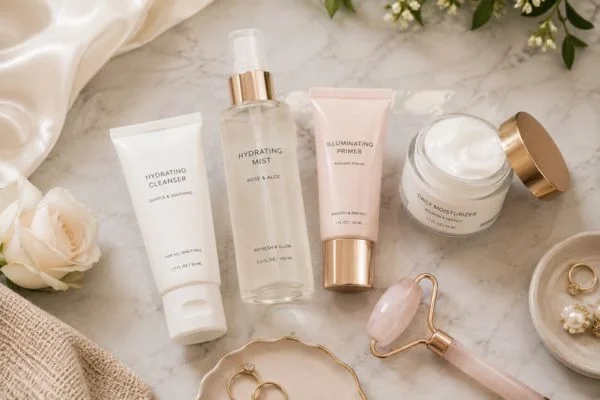
What Does "Glowing Skin" Actually Mean for Brides?
Every wedding makeup article mentions "glowing skin." But what does that look like in practice?
It starts months before the wedding, not the morning of. The brides who get the best results from their makeup artist are the ones who've been consistent with hydration and skincare for three to six months leading up to the day. A good artist can work with any skin type, but prepped skin holds product longer and photographs with more dimension.
The technique itself has shifted away from full-coverage foundation toward lighter formulas. Think skin tints, luminous primers, and strategic concealer rather than a blanket layer over the entire face. Highlighter goes on the cheekbones and bridge of the nose for a lit-from-within effect, but subtly. The goal is dimension, not sparkle.
Even brides who normally prefer a matte finish are finding a middle ground. A satin base with a touch of highlighter on the high points keeps things from looking flat on camera. The industry calls this "underpainting," a technique where you apply contour and highlight under your foundation so the definition stays soft and believable.
One thing that's underreported: dewy looks can go wrong fast in warm or humid venues. If your wedding is outdoors in July, talk to your artist about transfer-resistant formulas and setting techniques that lock in the glow without turning it into shine by hour four.
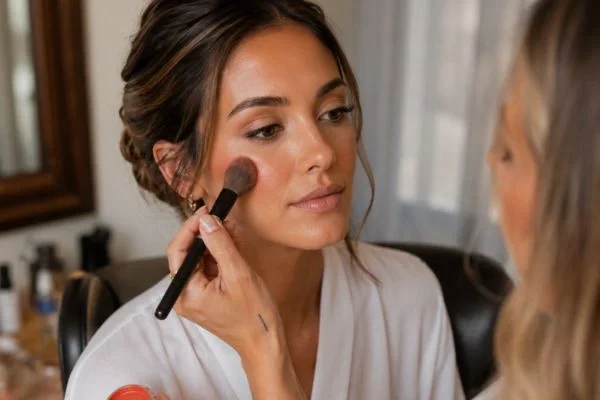
Why Is Soft Glam Replacing Heavy Contour?
Because heavy contours don't age well in photos. Period.
Scroll back through wedding albums from 2016 to 2019 and you'll spot the stark contour lines, the baked under-eye triangles, the completely matte skin. Those techniques looked great in ring-light selfies. In natural daylight, in professional photography, and especially years later, they often look harsh.
Soft glam keeps the same goal (defined features, photo-ready finish) but gets there with lighter tools. Sheer contour balms and cream sticks that blend into skin instead of sitting on top of it. Diffused smoky eyes in taupe or chocolate instead of jet black with hard edges. Blush placed higher on the cheekbones with a cream formula for a natural flush.
Actually, the framing of "soft glam vs. heavy glam" isn't quite right. The better way to think about it is this: the technique is the same, but the opacity is dialed down. A skilled artist still sculpts and defines. They just use 40% of the product that would have gone on five years ago.
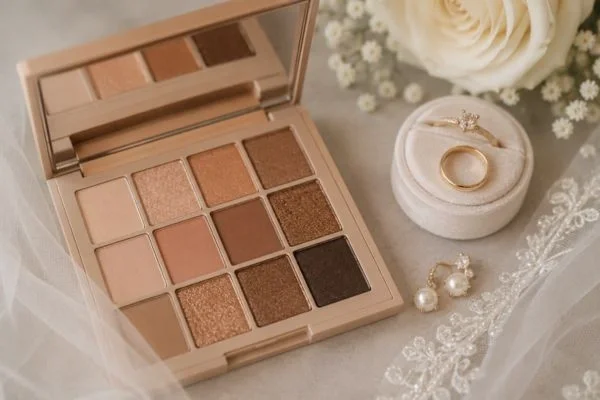
Which Color Palettes Are Brides Choosing Right Now?
The palette trends for 2026 skew warm and intentional. Here's what's showing up most in bridal portfolios and real wedding galleries right now:
Warm neutrals with soft dimensions. Peachy blushes, nude or rose-toned lips, taupe and brown eyeshadows. These work across diverse skin tones and photograph well in both natural light and evening settings.
Muted blush tones. This is pulling from Asian beauty trends, with beige, soft peach, and pastel strawberry shades creating a cohesive face. The trick is using the same muted tone family across eyes, cheeks, and lips.
One bold feature, everything else is quiet. A rich berry lip with soft eyes and minimal cheek color. Or a metallic eye wash with nude lips. The "pick one statement and let it breathe" approach is replacing the "everything at full volume" look.
Cool-toned accents. Icy shimmer on the lids, pearl-toned highlight, subtle metallic liner. This is the more fashion-forward edge of bridal makeup, and it's gaining ground among brides who want something less expected.
Intentional color as a personal choice. A lipstick shade that matches the wedding flowers. A shimmer that echoes a grandmother's vintage jewelry. Color choices in 2026 feel tied to something specific, not just "trending on TikTok."
The common thread: restraint. Pick a palette or a single standout detail. Don't try to do everything at once.
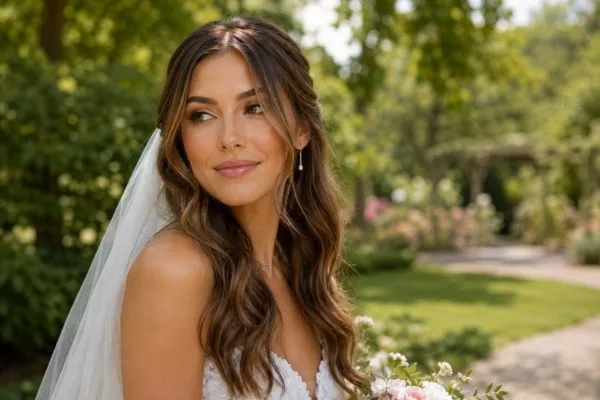
Does Your Hairstyle Need to Match Your Makeup?
Yes, but "match" doesn't mean "identical energy." It means the two shouldn't fight each other.
A romantic, loose curl hairstyle paired with sharp, angular makeup creates visual tension. So does a sleek chignon with very natural, barely-there makeup (the hair says "event" while the face says "brunch"). The best results happen when the mood is consistent across both.
Practical example: bohemian braids work with fresh, dewy makeup and soft lip color. Old Hollywood waves call for more defined brows, a red or berry lip, and a satin skin finish. A modern low bun pairs well with graphic liner or a clean, polished complexion.
More brides are booking trial sessions where both hair and makeup artists work together to align the full look. This is worth doing. It also helps with timing. When your beauty team has a shared vision, the wedding morning runs smoother and the final result is more cohesive.
How Should the Bridal Party's Makeup Coordinate?
Coordinated doesn't mean matching. It means the bridal party looks like they belong in the same wedding, not the same Instagram grid.
The approach that works best: pick a color family or intensity level and let each bridesmaid adapt it to their features. If the bride is wearing a berry lip, bridesmaids might go with a softer mauve or rose from the same family. If the bride has a warm neutral eye, the party can mirror that warmth without using identical shades.
I've seen brides provide a "beauty menu" to their parties. Three lip options, two eye looks, and each bridesmaid picks what suits their skin tone and comfort level. The unifying thread is there (same color family, same finish level), but nobody feels squeezed into a look that doesn't work for them.
The result in group photos is noticeable. Everyone looks polished and connected without looking like they were stamped from the same mold. And individual portraits still feel personal.
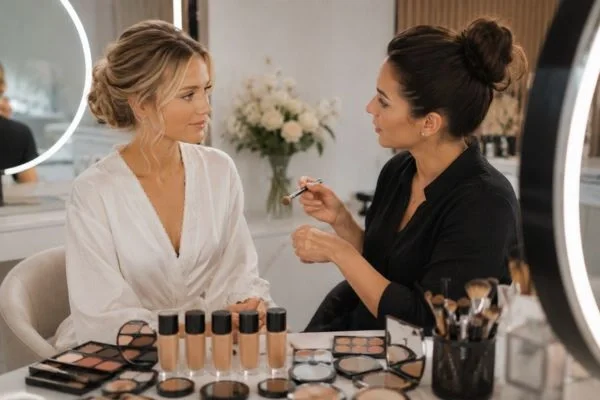
What Questions Should You Ask Before Your Makeup Trial?
This is where most brides leave value on the table. The trial isn't just "try on a face." It's a working session to test how products perform on your skin, in your venue's lighting, and over time.
Questions to bring to your trial:
What products are you using and have they been tested for transfer resistance? (The FDA's MoCRA regulations, implemented starting in 2024 and 2025, have increased product safety standards. Cosmetics regulation updates now require facility registration, product listing, and allergen labeling.)
How does this look perform in humidity or heat? My venue is outdoors/indoors/mixed.
What's your touch-up plan during the event? Do you stay on-site, or do you provide a touch-up kit?
Can we take photos in different lighting (natural, flash, tungsten) to see how the makeup reads?
What removal process do you recommend at the end of the night?
The trial is also when you should test longevity. Wear the trial makeup for at least four hours after the session and check how it holds up. If it's breaking down at hour three in normal conditions, it won't survive a 12-hour wedding day.
The Bureau of Labor Statistics projects 5% growth in cosmetology and styling roles through 2034, adding roughly 35,300 jobs. Demand for skilled wedding makeup artists is climbing. Book your trial early, especially for peak wedding season dates.
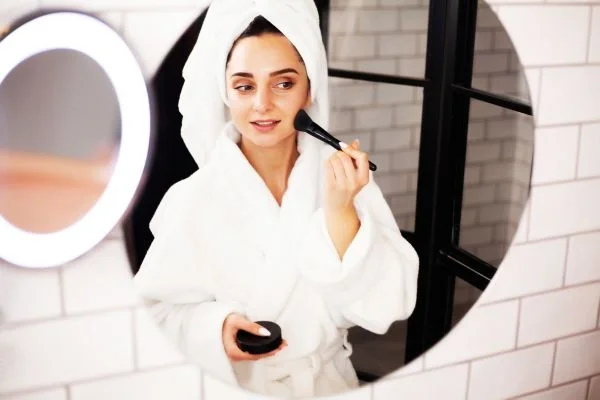
What About DIY Wedding Makeup?
I'm going to be direct here: for most brides, doing your own wedding makeup is a false economy.
The cost savings look attractive on paper. But wedding makeup isn't just about the products. It's about application techniques that account for photography, the specific lighting at your venue, long-wear layering, and the ability to manage touch-ups through an emotional, physically active day. A professional knows how to build a base that doesn't crease under the eyes by hour eight. That's not something a YouTube tutorial fully prepares you for.
There are exceptions. If you're a trained makeup artist yourself, or if your wedding is very small and casual, DIY can work beautifully. But for a full-day event with professional photography, the gap between professional application and self-application usually shows up in the images.
The U.S. beauty and personal care market is projected to hit $106.76 billion in revenue by 2026, per Statista. The professional bridal segment of that market exists because the results are measurably different. Working with pros who understand your market is where most brides find the biggest return on their beauty budget.
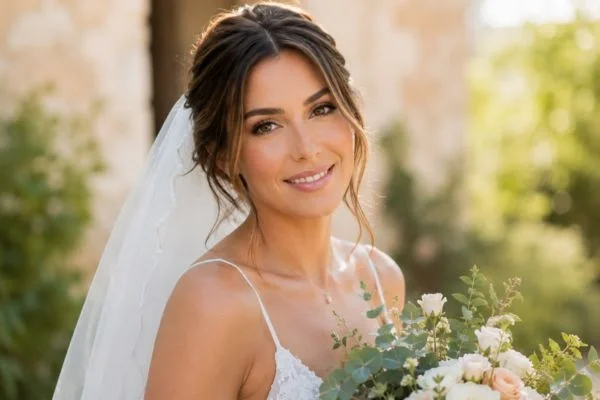
How to Start Planning Your Wedding Makeup
Don't start with Pinterest boards. Start with your skin.
Book a dermatologist appointment or start a consistent skincare routine at least three months before your wedding. Hydrated, healthy skin is the single biggest factor in how your wedding makeup will look and last. No product or technique can fully compensate for dehydrated or irritated skin.
Then, reach out to your preferred artist six to eight months before the date. Share reference photos, but also be honest about your daily makeup comfort level. The best bridal makeup is one that feels like you, just elevated for the moment.
Trends come and go. In 2026, the brides who look best are the ones who used trends as inspiration, not as a checklist. Pick the elements that make sense for your face, your venue, your lighting, and your comfort. Everything else is noise.
Frequently Asked Questions
How long does professional wedding makeup actually last?
Professional application with proper prep, layering, and setting products typically lasts 12 or more hours. The keys are primer, transfer-resistant formulas, setting spray, and blotting papers for midday touch-ups. Without professional technique, most makeup starts breaking down around the four-to-six hour mark.
Do I need a wedding makeup trial even if I love the artist's portfolio?
Absolutely. Every face responds differently to products, and what looks stunning on one person's skin can oxidize or crease on yours. A trial catches issues with color matching, wear time, and formula compatibility weeks before the wedding instead of the morning of.
What's the difference between "natural" and "no-makeup makeup" for wedding day looks?
Natural wedding makeup enhances your features with visible glow, soft definition, and polished skin. No-makeup makeup goes even sheerer, focusing almost entirely on skincare-level coverage with barely detectable color. Both are popular in 2026, but natural gives more payoff in professional photography.
How far in advance should I start prepping my skin for wedding makeup?
Most professionals recommend three to six months of consistent skincare before the wedding. Hydrated, even-toned skin holds makeup longer and photographs with better dimension. Starting early also gives time to address any reactions to new products.
Should bridesmaids get the same wedding makeup as the bride?
Coordinated, not matching. Choose a shared color family or finish level and let each bridesmaid adapt it to their skin tone and comfort. The goal is visual cohesion in group photos while each person still looks like themselves.
What skin prep do wedding makeup artists recommend the morning of?
A gentle cleanser, hydrating serum, moisturizer, and SPF (with no white-cast formulas that can cause flashback in photos). Avoid trying new products on the wedding morning. Stick with what your skin already knows and responds well to.